Abstract
Introduction: Viral hepatitis B (HBV) remains a major public health concern in Mali, where its prevalence is still very high. The aim of this study was to identify factors associated with the levels of knowledge, attitudes, and practices (KAP) toward hepatitis B virus infection among students at Kankou Moussa University (UKM). Methods: A cross-sectional study was conducted from 1 January to 18 December 2025, among 425 medical and pharmacy students. Data were collected using a structured questionnaire and analyzed using SPSS software (version 25.0). Results: The mean age of the participants was 21.25 ± 2.64 years, with a female predominance. More than half (50.1%) of the participants had good knowledge, 88.7% had a positive attitude, and 51.3% demonstrated good practices. A statistically significant association was found between students’ knowledge and level of education (aOR = 0.30; 95% CI [0.11–0.78]). Students’ attitudes were significantly associated with age (aOR = 0.31; 95% CI [0.10–0.98]), second-year level of study (aOR = 0.14; 95% CI [0.04–0.49]), and third-year level of study (aOR = 0.16; 95% CI [0.05–0.56]). Students’ practices were associated with close contact with parents or relatives affected by HBV (aOR = 0.58; 95% CI [0.34–0.98]). Conclusion: Students at UKM demonstrated a moderate level of knowledge and a favorable attitude toward hepatitis B. However, preventive measures, particularly screening and vaccination, remained low. In addition, general biosafety practices did not comply with recommended standards. The factors associated with the dependent variables were age, academic level, frequent contact with relatives or close acquaintances infected with HBV, and experience in patient management. Strengthening training and awareness from the early years of study is therefore essential. In addition, regular vaccination and screening campaigns should be organized within the university to reduce the risk of infection.
|
Published in
|
World Journal of Public Health (Volume 11, Issue 2)
|
|
DOI
|
10.11648/j.wjph.20261102.15
|
|
Page(s)
|
137-145 |
|
Creative Commons
|

This is an Open Access article, distributed under the terms of the Creative Commons Attribution 4.0 International License (http://creativecommons.org/licenses/by/4.0/), which permits unrestricted use, distribution and reproduction in any medium or format, provided the original work is properly cited.
|
|
Copyright
|
Copyright © The Author(s), 2026. Published by Science Publishing Group
|
Keywords
Hepatitis B Virus (HBV), Associated Factors, Knowledge, Attitudes and Practices (KAP), Health Science Students, Mali
1. Introduction
All the information acquired by students, as well as their attitudes and practices regarding infectious diseases, play a crucial role in reducing the risk of acquisition, transmission, and prevention of these diseases, particularly viral hepatitis B. Adequate knowledge and appropriate preventive behaviors among healthcare students are essential to limit occupational exposure and ensure safe clinical practice
| [1] | W, E. A.; Tume, C.; Njouom, R.; Ayong, L.; Fondoh, V.; Kuiate, J.-R. Knowledge, Attitude and Prevalence of Hepatitis B Virus among Healthcare Workers: A Cross-Sectional, Hospital-Based Study in Bamenda Health District, NWR, Cameroon. BMJ Open 2020, 10(3), e031075.
https://doi.org/10.1136/bmjopen-2019-031075 |
| [2] | Naqid, I. A., Mosa, A. A., Ibrahim, S. V., Ibrahim, N. H. & Hussein, N. R. Hepatitis B vaccination status and knowledge, attitude, and practice towards Hepatitis B virus among medical sciences students: A cross-sectional study. PloS One 18, e0293822 (2023).
https://doi.org/10.1371/journal.pone.0293822 |
[1, 2]
. Hepatitis B is a potentially life-threatening viral infection caused by a hepatotropic DNA virus known as the hepatitis B virus (HBV)
| [3] | Sangho, O. et al. Study of Knowledge, Attitudes and Practices of Students at Kankou Moussa University Regarding Hepatitis B Virus in 2025. Open J. Epidemiol. 16, 238–251 (2026). DOI: 10.4236/ojepi.2026.162018 |
[3]
.
Hepatitis B remains a major global public health concern. According to the most recent estimates, approximately 254 million people were living with chronic hepatitis B infection worldwide in 2022, with about 1.5 million new infections occurring annually
| [4] | Hiebert-Suwondo, L. et al. A 2024 global report on national policy, programmes, and progress towards hepatitis B elimination: findings from 33 hepatitis elimination profiles. Lancet Gastroenterol. Hepatol. 10, 671–684 (2025).
https://doi.org/10.1016/S2468-1253(25)00069-X |
| [5] | Hsu, Y.-C., Huang, D. Q. & Nguyen, M. H. Global burden of hepatitis B virus: current status, missed opportunities and a call for action. Nat. Rev. Gastroenterol. Hepatol. 20, 524–537 (2023). https://doi.org/10.1038/s41575-023-00760-9 |
| [6] | Spearman, C. W. et al. Hepatitis B in sub-Saharan Africa: strategies to achieve the 2030 elimination targets. Lancet Gastroenterol. Hepatol. 2, 900–909 (2017).
https://doi.org/10.1016/S2468-1253(17)30295-9 |
[4-6]
. Despite the availability of an effective vaccine, HBV continues to cause substantial morbidity and mortality, particularly in low- and middle-income countries
| [4] | Hiebert-Suwondo, L. et al. A 2024 global report on national policy, programmes, and progress towards hepatitis B elimination: findings from 33 hepatitis elimination profiles. Lancet Gastroenterol. Hepatol. 10, 671–684 (2025).
https://doi.org/10.1016/S2468-1253(25)00069-X |
| [6] | Spearman, C. W. et al. Hepatitis B in sub-Saharan Africa: strategies to achieve the 2030 elimination targets. Lancet Gastroenterol. Hepatol. 2, 900–909 (2017).
https://doi.org/10.1016/S2468-1253(17)30295-9 |
[4, 6]
.
In Africa, the burden of hepatitis B remains particularly high. Recent estimates indicate that the prevalence of chronic HBV infection in the general population was around 5.8% in 2022, making the African region one of the most affected areas globally
.
In Mali, hepatitis B is considered highly endemic. A national estimate suggested that the prevalence of HBV infection in the general population was approximately 12.1% in 2020, corresponding to nearly 2.5 million infected individuals
| [7] | Fofana, D. B. et al. Hepatitis B Virus in West African Children: Systematic Review and Meta-Analysis of HIV and Other Factors Associated with Hepatitis B Infection. Int. J. Environ. Res. Public. Health 20, 4142 (2023).
https://doi.org/10.3390/ijerph20054142 |
| [8] | Preventing needlestick injuries among healthcare workers: a WHO–ICN collaboration. International Journal of Occupational and Environmental Health, Vol. 10, No. 4.
https://www.tandfonline.com/doi/abs/10.1179/oeh.2004.10.4.451 (accessed 2025-02-01). |
[7, 8]
.
Occupational exposure to hepatitis B virus (HBV) is a major concern among healthcare professionals, especially healthcare students. Each year, an estimated two million healthcare workers are exposed to blood-borne viral pathogens, leading to nearly 70,000 HBV infections
. Health students, who routinely handle blood and other bodily fluids as part of their training, are particularly vulnerable to HBV infection due to inadequate knowledge, attitudes, and practices (KAP) related to the virus
| [9] | Tarantola, A.; Abiteboul, D.; Rachline, A. Infection Risks Following Accidental Exposure to Blood or Body Fluids in Health Care Workers: A Review of Pathogens Transmitted in Published Cases. American Journal of Infection Control 2006, 34(6), 367–375. https://doi.org/10.1016/j.ajic.2004.11.011 |
| [10] | Ciorlia, L. A. S.; Zanetta, D. M. T. Hepatitis B in Healthcare Workers: Prevalence, Vaccination and Relation to Occupational Factors. Braz J Infect Dis 2005, 9, 384–389.
https://doi.org/10.1590/S1413-86702005000500005 |
[9, 10]
.
Considering the critical role of adequate knowledge and appropriate attitudes in preventing hepatitis B virus (HBV) infection, this study was conducted among future health professionals. Its findings are expected to inform strategies to enhance students’ knowledge, attitudes, and practices (KAP) regarding HBV, thereby contributing to disease control. The primary aim of this study was to identify factors associated with the levels of knowledge, attitudes, and practices (KAP) toward hepatitis B virus infection among students at Kankou Moussa University (UKM) in Bamako.
2. Methodology
2.1. Study Setting
This study was conducted at Kankou Moussa University (UKM) in Bamako, a private higher education institution hosting a Faculty of Medicine and Pharmacy. The university annually enrolls students from more than twenty countries. Established in 2009, UKM had approximately 840 students enrolled in 2025.
2.2. Type and Period Study
A cross-sectional study was conducted from 1 January to 18 December 2025.
2.3. Study Population
The study population consisted of all students enrolled at Kankou Moussa University (UKM) during the 2024–2025 academic year.
2.3.1. Inclusion and Exclusion Criteria
The study included students enrolled at UKM during the 2024–2025 academic year who provided informed consent to participate. Students who were absent or unavailable during the survey period were excluded.
2.3.2. Sampling
(i). Sampling Technique
A stratified random sampling method was used, with each year of study considered as a stratum. The sample size was allocated proportionally according to the number of students in each stratum. Within each stratum, participants were then selected using simple random sampling.
To ensure representativeness, the required sample size was achieved within each stratum. When the target number of participants was not reached in a given stratum, the shortfall was compensated by selecting additional students from other strata. The estimated sample size for the study was 424 students, proportionally distributed between the pharmacy and medicine programs. Accordingly, 157 participants were selected from the pharmacy program and 267 from the medicine program (
Table 1).
The allocation of participants to each stratum was performed as follows:
Step 1: Calculate the percentage of students in each stratum relative to the total student population.
1) Total students = 837 → 100%
2) Students per stratum → X% per stratum
Step 2: Determine the sample size for each stratum based on the percentage obtained and the total sample size.
1) 100% → total sample
2) X% per stratum → X students per stratum
Table 1. Number of samples per class.
Level of study | Sample per class |
Pharmacy | Medicine |
1st Year | 38 | 76 |
2nd Year | 34 | 51 |
3rd Year | 34 | 42 |
4th Year | 17 | 34 |
5th Year | 21 | 30 |
6th Year | 13 | 17 |
7th Year | 0 | 17 |
Total | 157 | 267 |
(ii). Sample Size Calculation
Based on previous models in the literature
| [11] | Abdoulaye, P. M. B. HBsAg carriage among adolescents at the Kadiolo Reference Health Center, 2021. [Medical Thesis]; University of Sciences, Techniques and Technologies of Bamako; 2021. |
| [12] | Angelo, A. A.; Teketelew, B. B.; Berta, D. M.; Chane, E.; Cherie, N.; Nigus, M.; Girmay, G.; Tamir, M.; Bitew, M. Knowledge, Attitude, and Practices towards Hepatitis Infection and Its Associated Factors among Adults in Gondar Town, Northwest Ethiopia; a Community-Based Study, 2021. Journal of Health, Population and Nutrition 2024, 43(1), 178.
https://doi.org/10.1186/s41043-024-00654-9 |
[11, 12]
, we assumed that approximately 50% of students would have good knowledge, attitudes, and practices, with a 5% margin of error. The minimum sample size was calculated using Daniel Schwartz’s formula:
=
(z
α)
2.
Where:
1) n = sample size
2) P=50% (proportion of the event studied)
3) I=desired precision (5%)
4) Q=1-P
5) Zα=1.96 (reduced difference test); Zα =1.96 for α =5%)
=(1.96)2n=385
To compensate for non-response, 10% was added, resulting in a total sample size of 424 students.
2.4. Assessment and Categorization of Students’ Knowledge, Attitudes, and Practices (KAP)
The questionnaire was developed based on previously published literature
| [13] | Alaridah, N. et al. Knowledge, Attitude, and Practices toward Hepatitis B Infection among Healthcare Students—A Nationwide Cross-Sectional Study in Jordan. Int. J. Environ. Res. Public. Health 20, 4348 (2023). https://doi.org/10.3390/ijerph20054348 |
| [14] | Abdela, A., Woldu, B., Haile, K. et al. Assessment of knowledge, attitudes and practices toward prevention of hepatitis B virus infection among students of medicine and health sciences in Northwest Ethiopia. BMC Res Notes 9, 410 (2016). https://doi.org/10.1186/s13104-016-2216-y |
[13, 14]
. It was pretested among 10 students and subsequently validated by the teaching staff of the Department of Public Health Teaching and Research at the Faculty of Medicine and Odonto-Stomatology of Bamako. Knowledge, attitude, and practice (KAP) were assessed using 34, 10, and 9 items, respectively
| [13] | Alaridah, N. et al. Knowledge, Attitude, and Practices toward Hepatitis B Infection among Healthcare Students—A Nationwide Cross-Sectional Study in Jordan. Int. J. Environ. Res. Public. Health 20, 4348 (2023). https://doi.org/10.3390/ijerph20054348 |
| [14] | Abdela, A., Woldu, B., Haile, K. et al. Assessment of knowledge, attitudes and practices toward prevention of hepatitis B virus infection among students of medicine and health sciences in Northwest Ethiopia. BMC Res Notes 9, 410 (2016). https://doi.org/10.1186/s13104-016-2216-y |
[13, 14]
. Each correct response was scored 1 point, and incorrect responses were scored 0. Total scores for each KAP domain were dichotomized into “good” and “poor” following established thresholds
| [13] | Alaridah, N. et al. Knowledge, Attitude, and Practices toward Hepatitis B Infection among Healthcare Students—A Nationwide Cross-Sectional Study in Jordan. Int. J. Environ. Res. Public. Health 20, 4348 (2023). https://doi.org/10.3390/ijerph20054348 |
| [14] | Abdela, A., Woldu, B., Haile, K. et al. Assessment of knowledge, attitudes and practices toward prevention of hepatitis B virus infection among students of medicine and health sciences in Northwest Ethiopia. BMC Res Notes 9, 410 (2016). https://doi.org/10.1186/s13104-016-2216-y |
[13, 14]
, with ≥70% considered good and <70% considered poor.
Knowledge was classified as good if participants answered at least 24 of 34 questions correctly (≥70%), and poor if fewer than 24 responses were correct. Attitude was considered good for those providing at least 7 correct responses out of 10, and poor otherwise. Practice was classified as good for participants correctly answering at least 6 of 9 questions, and poor for fewer than 6 correct responses. A 70% threshold was adopted because, for health sciences students, a median score of 50% would be insufficient to adequately classify their levels of knowledge, attitudes, and practices.
2.5. Variables Studied
The study variables encompassed the following domains:
1) Sociodemographic characteristics: age, sex, program of study, and level of study.
2) Knowledge of hepatitis B: awareness of HBV contagiousness, modes of transmission, prevention strategies, complications, treatment options, and diagnosis/screening.
3) Attitudes toward hepatitis B: confidence in vaccination, belief in preventive measures, perceived risk of infection, and fear of contamination.
4) Behavioral practices regarding hepatitis B: adherence to screening, vaccination, safety measures, and willingness to accept treatment.
2.6. Data Collection Technique and Tools Used
A structured questionnaire was developed using Google Forms and disseminated through WhatsApp groups for each class, with oversight by the class student representative. The link included an informed consent form and a brief explanation of the study objectives and purpose. Participants completed the questionnaire independently on their smartphones, ensuring responses were provided without external influence. The data were subsequently exported to Excel to generate the study database for analysis.
2.7. Data Analysis
Data were analyzed using SPSS version 25.0. The analysis comprised three stages:
Descriptive analysis: The study sample was described using means ± standard deviations for quantitative variables and percentages for categorical variables.
Univariate analysis: Associations between the dependent variables (knowledge, attitudes, and practices) and independent variables were examined using Pearson’s Chi-square test or Fisher’s exact test, as appropriate.
Multivariate analysis: Binary logistic regression was conducted to identify factors independently associated with students’ KAP. Variables with p ≤ 0.20 in the univariate analysis were included in the regression model. Statistical significance was defined as p < 0.05.
2.8. Ethical Considerations
Ethical approval was obtained from the university authorities before the commencement of the study. Participation was entirely voluntary, and all students provided informed consent. Participants were fully informed of the study objectives and procedures. Anonymity and confidentiality of the data were strictly maintained.
3. Results
3.1. Sociodemographic Characteristics
The mean age of participants was 21.25 ± 2.64 years, with the majority (78.5%, n = 334) aged between 18 and 24 years. Females accounted for 60.9% (n = 259) of the sample, and 64.2% (n= 273) were enrolled in the medical program. Regarding the level of study, first, second and third-year students represented 28.2% (n = 120), 21.2% (n = 90), and 18.6% (n = 79) of the participants, respectively. (
Table 2).
Table 2. Sociodemographic characteristics of students at Kankou Moussa University (UKM), 2024–2025 (n = 425).
Variables | Number (n) | Percentage (%) | Mean±SD* |
Age (years) | | | 21.25 ± 2.64 |
Age groups (years) | | | |
16-18 | 16 | 3.8 | |
18-24 | 334 | 78.5 | |
24-30 | 70 | 16.5 | |
30-35 | 5 | 1.2 | |
Sex | | | |
Male | 166 | 39.1 | |
Female | 259 | 60.9 | |
Proram of study | | | |
Pharmacy | 152 | 35.8 | |
Medicine | 273 | 64.2 | |
Year of study | | | |
1st year | 120 | 28.2 | |
2nd year | 90 | 21.2 | |
3rd year | 79 | 18.6 | |
4th year | 52 | 12.2 | |
5th year | 46 | 10.8 | |
6th year | 21 | 4.9 | |
7th year | 17 | 4.1 | |
Mean±SD*: mean and standard deviation
3.2. Knowledge of Students at Kankou Moussa University Regarding Viral Hepatitis B
Overall, 91.8% (n = 390) of participants correctly identified the causative agent of hepatitis B. Knowledge of transmission routes and preventive measures was reported by 73.4% (n = 312) and 74.8% (n = 318) of students, respectively. In addition, 60.9% (n = 259) were aware of the objectives of curative treatment. However, only 28.0% (n = 119) correctly identified newborns as a high-risk group for developing chronic hepatitis B. Furthermore, 44.5% (n = 189) recognized the major complications of hepatitis B, including liver failure, cirrhosis, hepatocellular carcinoma, and premature death.
3.3. Attitudes of Students at Kankou Moussa University Toward Hepatitis B Virus (HBV)
Regarding occupational risk, 67.3% (n = 286) of students reported fear of HBV infection. In addition, 64.2% (n = 273) perceived themselves to be at a higher risk of infection than the general population, and 57.9% (n = 246) were aware of the potential risk during their clinical training. However, only 29.9% (n = 127) reported feeling confident in managing patients with hepatitis B.
3.4. Practices of Students at Kankou Moussa University Regarding Hepatitis B
In this study, 29.9% (n=127) of students reported having previously undergone HBV screening, and 45.6% (n=194) had received hepatitis B vaccination. Concerning biosafety practices, 56.7% (n=241) reported disposing of medical waste in designated biomedical waste bags, 29.9% (n=127) discarded needles without recapping them, and 43.1% (n=183) reported occasionally working without personal protective equipment (PPE).
3.5. Knowledge, Attitude, and Practice Scores of Students at Kankou Moussa University Regarding Viral Hepatitis B, 2024–2025
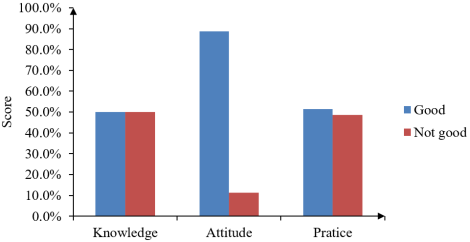
Overall, 50.1% of participants demonstrated good knowledge of hepatitis B. Furthermore, 88.7% exhibited positive attitudes, while 51.3% reported good preventive practices related to hepatitis B (
Figure 1).
Figure 1. Distribution of Knowledge, Attitude, and Practice (KAP) Scores among UKM Students Regarding Hepatitis B Virus.
3.6. Factors Associated with Knowledge, Attitudes, and Practices (KAP) of Students
In multivariate analysis, knowledge of hepatitis B was significantly associated with educational level (adjusted odds ratio [aOR] = 0.30; 95% CI: 0.11–0.78). Positive attitudes were significantly associated with age (aOR = 0.31; 95% CI: 0.10–0.98) and level of study. Compared with first-year students, second-year (aOR = 0.14; 95% CI: 0.04–0.49) and third-year students (aOR = 0.16; 95% CI: 0.05–0.56) were less likely to demonstrate positive attitudes. In addition, students who reported having a parent or close relative infected with HBV were less likely to engage in good preventive practices (aOR = 0.58; 95% CI: 0.34–0.98) than those without a family history of infection (
Table 3).
Table 3. Multivariate analysis of factors associated with knowledge, attitudes, and practices (KAP) regarding hepatitis B among students at Kankou Moussa University, 2024–2025.
Variable | Knowledge. | Attitude | Practices |
| aOR* | [IC95%] | aOR* | [IC95%] | aOR* | [IC95%] |
Age range |
16–18 | 1.85 | [0.33–10.3] | 0.22 | [0.04–1.08] | 0.85 | [0.15–4.87] |
18–24 | 0.74 | [0.14–3.80] | 0.31 | [0.10–0.98] | 1.05 | [0.19–5.70] |
24–30 | 0.62 | [0.11–3.34] | - | Ref (24-35) | 0.78 | [0.14–4.35] |
30-35 | - | Ref | - | - | | Ref |
Level of training |
1ʳᵉ | 0.62 | [0.23–1.68] | 0.38 | [0.12–1.17] | 1.48 | [0.52–4.21] |
2ᵉ | 0.79 | [0.32–1.94] | 0.14 | [0.04–0.49] | 0.99 | [0.35–2.83] |
3ᵉ | 0.58 | [0.22–1.50] | 0.16 | [0.05–0.56] | 0.72 | [0.25–2.09] |
4ᵉ | 0.3 | [0.11–0.78] | 0.47 | [0.09–2.44] | 0.44 | [0.14–1.34] |
5ᵉ | 0.47 | [0.17–1.27] | | Ref | 0.57 | [0.19–1.73] |
6ᵉ | 0.41 | [0.12–1.35] | | - | 0.51 | [0.14–1.85] |
7e | | Ref | | - | | Ref |
Having a parent/relative affected by HBV |
No | | Ref | | Ref | | Ref |
Yes | 0.69 | [0.43–1.12] | 1.29 | [0.58–2.84] | 0.58 | [0.34–0.98] |
Having experience caring for HBV+ patients |
No | | Ref | | Ref | | Ref |
Yes | 0.95 | [0.15–1.23] | 2.18 | [1.14–4.16] | 0.88 | [0.57–1.35] |
Theoretical training on HBV |
No | | Ref | | | | |
Yes | 1.18 | [0.81–1.71] | 1.45 | [0.78–2.70] | 0.92 | [0.62–1.36] |
Specific training on HBV |
No | | Ref | | | | |
Yes | 1.21 | [0.75–1.96] | 1.39 | [0.68–2.85] | 0.98 | [0.60–1.60] |
Internship in infectious diseases |
No | | Ref | | | | |
Yes | 1.48 | [0.94–2.34] | 1.46 | [0.73–2.89] | 1.32 | [0.80–2.17] |
Frequent contact with HBV patients |
No | | Ref | | | | |
Yes | 0.86 | [0.58–1.27] | 1.59 | [0.86–2.95] | 0.81 | [0.50–1.30] |
aOR*: Adjusted Odds Ratio
4. Discussion
This study, which aimed to identify factors associated with the levels of knowledge, attitudes, and practices regarding hepatitis B among students at Kankou Moussa University (UKM), included 425 participants. However, several limitations should be considered when interpreting the results.
First, the inclusion of first- and second-year students may have influenced the overall findings, particularly regarding knowledge levels and preventive practices. As these students had not yet started clinical training or hospital internships, their theoretical knowledge of hepatitis B and related occupational risks may have been limited, potentially leading to an underestimation of knowledge, attitudes, and practices.
Second, uncertainty remains regarding the actual vaccination coverage, as vaccination records could not be verified.
Finally, the use of a self-administered questionnaire via Google Forms may have introduced information bias, particularly social desirability bias, whereby some students may have provided responses perceived as socially acceptable rather than reflecting their true perceptions or behaviors.
4.1. Knowledge of Students at Kankou Moussa University (UKM) About Hepatitis B Virus Infection, 2024–2025
In this study, the majority of participants were from the lower years of study (first, second, and third years). Knowledge of HBV varied significantly according to the level of study. Fourth-year students had a significantly lower probability of having good knowledge of HBV compared with seventh-year students (adjusted odds ratio [aOR] = 0.30; 95% CI: 0.11–0.78; p = 0.014). This finding suggests that the acquisition of knowledge about HBV progresses as students advance academically. Similar results have been reported in studies conducted in comparable context, including those by Mursy and Mohamed
| [15] | Mursy, S. M. M.; Mohamed, S. O. O. Knowledge, Attitude, and Practice towards Hepatitis B Infection among Nurses and Midwives in Two Maternity Hospitals in Khartoum, Sudan. BMC Public Health 2019, 19, 1597.
https://doi.org/10.1186/s12889-019-7982-8 |
[15]
as well as other authors
| [16] | Bentouhami, M. R.; Chakib, A.; El Fane, M. Hepatitis B Knowledge, Attitudes and Practices among Moroccan College Students. Rev Epidemiol Sante Publique 2019, 67(6), 397–402. https://doi.org/10.1016/j.respe.2019.06.002 |
| [17] | Alaridah, N.; Jarrar, R. F.; Joudeh, R. M.; Al-Abdallat, H.; Ismail, L.; Alnajjar, Z.; Jum’ah, M.; Abu-Humaidan, A. H. Knowledge Gaps and Determination of Attitude and Practice among Medical Students toward Hepatitis B Infection: A Nationwide Cross-Sectional Study. International Journal of Hepatology 2024, 2024, 2730516.
https://doi.org/10.1155/2024/2730516 |
[16, 17]
. However, the observed difference in knowledge levels between fourth-year students and those in the lower academic years may be partly explained by the smaller sample size of fourth-year students compared with students in the lower levels.
Overall, about half of the UKM students demonstrated good knowledge of hepatitis B, whereas a similar proportion had insufficient understanding of key aspects such as HBV transmission, prevention, screening, diagnosis, and treatment. This nearly balanced distribution is concerning in a medical university setting, where a good knowledge level above 70% would normally be expected according to literature data
14
].
4.2. Attitudes of Students at Kankou Moussa University (UKM) Regarding Hepatitis B Virus Infection, 2024–2025
This study highlighted differences in attitudes according to age, level of education, and practical experience. Indeed, younger participants (18–24 years) had a lower probability of adopting a positive attitude compared with older participants (30–35 years) (aOR = 0.31; 95% CI: 0.10–0.98). This finding likely reflects the influence of maturity and clinical experience on attitude.
Additionally, students in the second and third years exhibited significantly lower likelihoods of adopting positive attitudes compared with students at higher academic levels (second year: aOR = 0.14; 95% CI: 0.04–0.49; third year: aOR = 0.16; 95% CI: 0.05–0.56; p = 0.004), confirming the importance of academic progression in the adoption of appropriate behaviors. Similar trends have been reported by some authors
| [17] | Alaridah, N.; Jarrar, R. F.; Joudeh, R. M.; Al-Abdallat, H.; Ismail, L.; Alnajjar, Z.; Jum’ah, M.; Abu-Humaidan, A. H. Knowledge Gaps and Determination of Attitude and Practice among Medical Students toward Hepatitis B Infection: A Nationwide Cross-Sectional Study. International Journal of Hepatology 2024, 2024, 2730516.
https://doi.org/10.1155/2024/2730516 |
| [18] | Gebremeskel, T.; Beshah, T.; Tesfaye, M.; Beletew, B.; Mengesha, A.; Getie, A. Assessment of Knowledge and Practice on Hepatitis B Infection Prevention and Associated Factors among Health Science Students in Woldia University, Northeast Ethiopia. Adv Prev Med 2020, 2020, 9421964.
https://doi.org/10.1155/2020/9421964 |
[17, 18]
.
Regarding practical experience, students who had previously cared for a patient infected with HBV were approximately twice as likely to adopt a positive attitude compared with those without such exposure (aOR = 2.18; 95% CI: 1.14–4.16; p = 0.018). This finding is consistent with the study of litterature, which reported improvements in preventive attitudes following practical clinical experience
| [17] | Alaridah, N.; Jarrar, R. F.; Joudeh, R. M.; Al-Abdallat, H.; Ismail, L.; Alnajjar, Z.; Jum’ah, M.; Abu-Humaidan, A. H. Knowledge Gaps and Determination of Attitude and Practice among Medical Students toward Hepatitis B Infection: A Nationwide Cross-Sectional Study. International Journal of Hepatology 2024, 2024, 2730516.
https://doi.org/10.1155/2024/2730516 |
[17]
.
4.3. Preventive Practices of Students at Kankou Moussa University (UKM) Toward Hepatitis B Virus Infection, 2024–2025
The results of our study revealed a low uptake of hepatitis B screening, with only a minority of participants reporting having been tested, despite a strong willingness to undergo treatment if found positive. This low level of screening practice may be explained by the fact that most students were unaware of the availability of free screening. Similarly, the vaccination rate was low, markedly below international recommendations
and lower than rates reported in other studies
| [20] | Tesfa, T., Hawulte, B., Tolera, A. and Abate, D. (2021) Hepatitis B Virus Infection and Associated Risk Factors among Medical Students in Eastern Ethiopia. PLOS ONE, 16, e0247267. https://doi.org/10.1371/journal.pone.0247267 |
| [21] | Adenlewo, O. J., Adeosun, P. O. & Fatusi, O. A. Medical and dental students’ attitude and practice of prevention strategies against hepatitis B virus infection in a Nigerian university. Pan Afr. Med. J. 28, 33(2017).
https://doi.org/10.11604/pamj.2017.28.33.11662 |
| [22] | Kisangau, E. N., Awour, A., Juma, B., Odhiambo, D., Muasya, T., Kiio, S. N., et al. (2018) Prevalence of Hepatitis B Virus Infection and Uptake of Hepatitis B Vaccine among Healthcare Workers, Makueni County, Kenya 2017. Journal of Public Health, 41, 765-771. https://doi.org/10.1093/pubmed/fdy186 |
[20-22]
. In this study, proximity to individuals with HBV emerged as a significant determinant of preventive practices. Students without a family member or close relative affected by HBV were less likely (42%; 95% CI [0.34–0.98]) to adopt appropriate practices compared to those with a family history of the infection. This result contrasts with findings from similar studies in other contexts. For instance, a study in Kisangau, E. N. et al. (2018) reported that direct exposure to HBV through personal contact or clinical experience enhanced not only knowledge but also attitudes and preventive practices
| [22] | Kisangau, E. N., Awour, A., Juma, B., Odhiambo, D., Muasya, T., Kiio, S. N., et al. (2018) Prevalence of Hepatitis B Virus Infection and Uptake of Hepatitis B Vaccine among Healthcare Workers, Makueni County, Kenya 2017. Journal of Public Health, 41, 765-771. https://doi.org/10.1093/pubmed/fdy186 |
[22]
. Similarly, research conducted in Vietnam by Hang Pham, T et al. (2019) showed that students who had prior exposure to HBV cases demonstrated better preventive practices
| [23] | Hang Pham, T. T.; Le, T. X.; Nguyen, D. T.; Luu, C. M.; Truong, B. D.; Tran, P. D.; Toy, M.; Bozkurt, S.; So, S. Knowledge, Attitudes and Medical Practice Regarding Hepatitis B Prevention and Management among Healthcare Workers in Northern Vietnam. PLoS One 2019, 14(10), e0223733.
https://doi.org/10.1371/journal.pone.0223733 |
[23]
.
5. Conclusion
This study found that students had moderate knowledge, generally positive attitudes, but inadequate preventive practices regarding hepatitis B. Biosafety practices did not comply with recommended standards. Academic level was a significant determinant of both knowledge and attitudes. These findings emphasize the need for regular HBV screening and vaccination programs for students, either free or subsidized, alongside targeted educational and awareness interventions.
Abbreviations
KAP | Knowledge, Attitude, Practice |
DERSP | Department of Teaching and Research in Public Health and Specialties |
UKM | Kankou Moussa University |
VHB | Viral Hepatitis B |
Acknowledgments
We thank Professor Hamadoun SANGHO, Head of Department of Teaching and Research in Public Health and Specialties (DERSP) and his entire team; for their contributions.
Our thanks also go to the managers of Kankou Moussa University for accepting this work in their structure.
Author Contributions
Abdoul Salam Diarra: Conceptualization, Data curation, Formal analysis, Methodology, Software, Validation, Visualization, Writing – original draft
Oumar Sangho: Conceptualization, Supervision, Validation, Visualization, Writing – original draft, Writing – review & editing
Sata Doumbia: Data curation, Formal Analysis, Validation
Yeya Dit Sadio Sarro: Validation, Writing – review & editing
Salia Keita: Validation, Visualization
Abou Sogodogo: Validation, Visualization, Writing – review & editing
Cheick Abou Coulibaly: Validation, Visualization
Housseini Dolo: Validation, Visualization
Lancina Doumbia Validation, Visualization
Borodjan Diarra: Validation, Visualization
Hamadoun Sangho: Supervision, Validation
Funding
This study did not receive any funding.
Data Availability Statement
The data generated or analyzed during this study are not publicly available; however, they can be obtained from the corresponding authors upon reasonable request.
Conflicts of Interest
We declare that we have no competing interests.
References
| [1] |
W, E. A.; Tume, C.; Njouom, R.; Ayong, L.; Fondoh, V.; Kuiate, J.-R. Knowledge, Attitude and Prevalence of Hepatitis B Virus among Healthcare Workers: A Cross-Sectional, Hospital-Based Study in Bamenda Health District, NWR, Cameroon. BMJ Open 2020, 10(3), e031075.
https://doi.org/10.1136/bmjopen-2019-031075
|
| [2] |
Naqid, I. A., Mosa, A. A., Ibrahim, S. V., Ibrahim, N. H. & Hussein, N. R. Hepatitis B vaccination status and knowledge, attitude, and practice towards Hepatitis B virus among medical sciences students: A cross-sectional study. PloS One 18, e0293822 (2023).
https://doi.org/10.1371/journal.pone.0293822
|
| [3] |
Sangho, O. et al. Study of Knowledge, Attitudes and Practices of Students at Kankou Moussa University Regarding Hepatitis B Virus in 2025. Open J. Epidemiol. 16, 238–251 (2026). DOI: 10.4236/ojepi.2026.162018
|
| [4] |
Hiebert-Suwondo, L. et al. A 2024 global report on national policy, programmes, and progress towards hepatitis B elimination: findings from 33 hepatitis elimination profiles. Lancet Gastroenterol. Hepatol. 10, 671–684 (2025).
https://doi.org/10.1016/S2468-1253(25)00069-X
|
| [5] |
Hsu, Y.-C., Huang, D. Q. & Nguyen, M. H. Global burden of hepatitis B virus: current status, missed opportunities and a call for action. Nat. Rev. Gastroenterol. Hepatol. 20, 524–537 (2023).
https://doi.org/10.1038/s41575-023-00760-9
|
| [6] |
Spearman, C. W. et al. Hepatitis B in sub-Saharan Africa: strategies to achieve the 2030 elimination targets. Lancet Gastroenterol. Hepatol. 2, 900–909 (2017).
https://doi.org/10.1016/S2468-1253(17)30295-9
|
| [7] |
Fofana, D. B. et al. Hepatitis B Virus in West African Children: Systematic Review and Meta-Analysis of HIV and Other Factors Associated with Hepatitis B Infection. Int. J. Environ. Res. Public. Health 20, 4142 (2023).
https://doi.org/10.3390/ijerph20054142
|
| [8] |
Preventing needlestick injuries among healthcare workers: a WHO–ICN collaboration. International Journal of Occupational and Environmental Health, Vol. 10, No. 4.
https://www.tandfonline.com/doi/abs/10.1179/oeh.2004.10.4.451
(accessed 2025-02-01).
|
| [9] |
Tarantola, A.; Abiteboul, D.; Rachline, A. Infection Risks Following Accidental Exposure to Blood or Body Fluids in Health Care Workers: A Review of Pathogens Transmitted in Published Cases. American Journal of Infection Control 2006, 34(6), 367–375.
https://doi.org/10.1016/j.ajic.2004.11.011
|
| [10] |
Ciorlia, L. A. S.; Zanetta, D. M. T. Hepatitis B in Healthcare Workers: Prevalence, Vaccination and Relation to Occupational Factors. Braz J Infect Dis 2005, 9, 384–389.
https://doi.org/10.1590/S1413-86702005000500005
|
| [11] |
Abdoulaye, P. M. B. HBsAg carriage among adolescents at the Kadiolo Reference Health Center, 2021. [Medical Thesis]; University of Sciences, Techniques and Technologies of Bamako; 2021.
|
| [12] |
Angelo, A. A.; Teketelew, B. B.; Berta, D. M.; Chane, E.; Cherie, N.; Nigus, M.; Girmay, G.; Tamir, M.; Bitew, M. Knowledge, Attitude, and Practices towards Hepatitis Infection and Its Associated Factors among Adults in Gondar Town, Northwest Ethiopia; a Community-Based Study, 2021. Journal of Health, Population and Nutrition 2024, 43(1), 178.
https://doi.org/10.1186/s41043-024-00654-9
|
| [13] |
Alaridah, N. et al. Knowledge, Attitude, and Practices toward Hepatitis B Infection among Healthcare Students—A Nationwide Cross-Sectional Study in Jordan. Int. J. Environ. Res. Public. Health 20, 4348 (2023).
https://doi.org/10.3390/ijerph20054348
|
| [14] |
Abdela, A., Woldu, B., Haile, K. et al. Assessment of knowledge, attitudes and practices toward prevention of hepatitis B virus infection among students of medicine and health sciences in Northwest Ethiopia. BMC Res Notes 9, 410 (2016).
https://doi.org/10.1186/s13104-016-2216-y
|
| [15] |
Mursy, S. M. M.; Mohamed, S. O. O. Knowledge, Attitude, and Practice towards Hepatitis B Infection among Nurses and Midwives in Two Maternity Hospitals in Khartoum, Sudan. BMC Public Health 2019, 19, 1597.
https://doi.org/10.1186/s12889-019-7982-8
|
| [16] |
Bentouhami, M. R.; Chakib, A.; El Fane, M. Hepatitis B Knowledge, Attitudes and Practices among Moroccan College Students. Rev Epidemiol Sante Publique 2019, 67(6), 397–402.
https://doi.org/10.1016/j.respe.2019.06.002
|
| [17] |
Alaridah, N.; Jarrar, R. F.; Joudeh, R. M.; Al-Abdallat, H.; Ismail, L.; Alnajjar, Z.; Jum’ah, M.; Abu-Humaidan, A. H. Knowledge Gaps and Determination of Attitude and Practice among Medical Students toward Hepatitis B Infection: A Nationwide Cross-Sectional Study. International Journal of Hepatology 2024, 2024, 2730516.
https://doi.org/10.1155/2024/2730516
|
| [18] |
Gebremeskel, T.; Beshah, T.; Tesfaye, M.; Beletew, B.; Mengesha, A.; Getie, A. Assessment of Knowledge and Practice on Hepatitis B Infection Prevention and Associated Factors among Health Science Students in Woldia University, Northeast Ethiopia. Adv Prev Med 2020, 2020, 9421964.
https://doi.org/10.1155/2020/9421964
|
| [19] |
World Health Organization (2022) Implementation Guide for Vaccination of Health Workers. World Health Organization.
https://www.who.int/publications/i/item/9789240052154
|
| [20] |
Tesfa, T., Hawulte, B., Tolera, A. and Abate, D. (2021) Hepatitis B Virus Infection and Associated Risk Factors among Medical Students in Eastern Ethiopia. PLOS ONE, 16, e0247267.
https://doi.org/10.1371/journal.pone.0247267
|
| [21] |
Adenlewo, O. J., Adeosun, P. O. & Fatusi, O. A. Medical and dental students’ attitude and practice of prevention strategies against hepatitis B virus infection in a Nigerian university. Pan Afr. Med. J. 28, 33(2017).
https://doi.org/10.11604/pamj.2017.28.33.11662
|
| [22] |
Kisangau, E. N., Awour, A., Juma, B., Odhiambo, D., Muasya, T., Kiio, S. N., et al. (2018) Prevalence of Hepatitis B Virus Infection and Uptake of Hepatitis B Vaccine among Healthcare Workers, Makueni County, Kenya 2017. Journal of Public Health, 41, 765-771.
https://doi.org/10.1093/pubmed/fdy186
|
| [23] |
Hang Pham, T. T.; Le, T. X.; Nguyen, D. T.; Luu, C. M.; Truong, B. D.; Tran, P. D.; Toy, M.; Bozkurt, S.; So, S. Knowledge, Attitudes and Medical Practice Regarding Hepatitis B Prevention and Management among Healthcare Workers in Northern Vietnam. PLoS One 2019, 14(10), e0223733.
https://doi.org/10.1371/journal.pone.0223733
|
Cite This Article
-
APA Style
Diarra, A. S., Sangho, O., Sangho, F., Doumbia, S., Sarro, Y. D. S., et al. (2026). Factors Associated with Knowledge, Attitudes, and Practices (KAP) of Students at Kankou Moussa University Regarding Hepatitis B Virus Infection, 2025. World Journal of Public Health, 11(2), 137-145. https://doi.org/10.11648/j.wjph.20261102.15
 Copy
|
Copy
|
 Download
ACS Style
Diarra, A. S.; Sangho, O.; Sangho, F.; Doumbia, S.; Sarro, Y. D. S., et al. Factors Associated with Knowledge, Attitudes, and Practices (KAP) of Students at Kankou Moussa University Regarding Hepatitis B Virus Infection, 2025. World J. Public Health 2026, 11(2), 137-145. doi: 10.11648/j.wjph.20261102.15
Copy
|
Download
AMA Style
Diarra AS, Sangho O, Sangho F, Doumbia S, Sarro YDS, et al. Factors Associated with Knowledge, Attitudes, and Practices (KAP) of Students at Kankou Moussa University Regarding Hepatitis B Virus Infection, 2025. World J Public Health. 2026;11(2):137-145. doi: 10.11648/j.wjph.20261102.15
Copy
|
Download
-
@article{10.11648/j.wjph.20261102.15,
  author = {Abdoul Salam Diarra and Oumar Sangho and Fanta Sangho and Sata Doumbia and Yeya Dit Sadio Sarro and Salia Keita and Abou Sogodogo and Nouhoum Telly and Cheick Abou Coulibaly and Housseini Dolo and Lancina Doumbia and Borodjan Diarra and Hamadoun Sangho},
  title = {Factors Associated with Knowledge, Attitudes, and Practices (KAP) of Students at Kankou Moussa University Regarding Hepatitis B Virus Infection, 2025},
  journal = {World Journal of Public Health},
  volume = {11},
  number = {2},
  pages = {137-145},
  doi = {10.11648/j.wjph.20261102.15},
  url = {https://doi.org/10.11648/j.wjph.20261102.15},
  eprint = {https://article.sciencepublishinggroup.com/pdf/10.11648.j.wjph.20261102.15},
  abstract = {Introduction: Viral hepatitis B (HBV) remains a major public health concern in Mali, where its prevalence is still very high. The aim of this study was to identify factors associated with the levels of knowledge, attitudes, and practices (KAP) toward hepatitis B virus infection among students at Kankou Moussa University (UKM). Methods: A cross-sectional study was conducted from 1 January to 18 December 2025, among 425 medical and pharmacy students. Data were collected using a structured questionnaire and analyzed using SPSS software (version 25.0). Results: The mean age of the participants was 21.25 ± 2.64 years, with a female predominance. More than half (50.1%) of the participants had good knowledge, 88.7% had a positive attitude, and 51.3% demonstrated good practices. A statistically significant association was found between students’ knowledge and level of education (aOR = 0.30; 95% CI [0.11–0.78]). Students’ attitudes were significantly associated with age (aOR = 0.31; 95% CI [0.10–0.98]), second-year level of study (aOR = 0.14; 95% CI [0.04–0.49]), and third-year level of study (aOR = 0.16; 95% CI [0.05–0.56]). Students’ practices were associated with close contact with parents or relatives affected by HBV (aOR = 0.58; 95% CI [0.34–0.98]). Conclusion: Students at UKM demonstrated a moderate level of knowledge and a favorable attitude toward hepatitis B. However, preventive measures, particularly screening and vaccination, remained low. In addition, general biosafety practices did not comply with recommended standards. The factors associated with the dependent variables were age, academic level, frequent contact with relatives or close acquaintances infected with HBV, and experience in patient management. Strengthening training and awareness from the early years of study is therefore essential. In addition, regular vaccination and screening campaigns should be organized within the university to reduce the risk of infection.},
 year = {2026}
}
Copy
|
Download
-
TY  - JOUR
T1  - Factors Associated with Knowledge, Attitudes, and Practices (KAP) of Students at Kankou Moussa University Regarding Hepatitis B Virus Infection, 2025
AU  - Abdoul Salam Diarra
AU  - Oumar Sangho
AU  - Fanta Sangho
AU  - Sata Doumbia
AU  - Yeya Dit Sadio Sarro
AU  - Salia Keita
AU  - Abou Sogodogo
AU  - Nouhoum Telly
AU  - Cheick Abou Coulibaly
AU  - Housseini Dolo
AU  - Lancina Doumbia
AU  - Borodjan Diarra
AU  - Hamadoun Sangho
Y1  - 2026/04/20
PY  - 2026
N1  - https://doi.org/10.11648/j.wjph.20261102.15
DO  - 10.11648/j.wjph.20261102.15
T2  - World Journal of Public Health
JF  - World Journal of Public Health
JO  - World Journal of Public Health
SP  - 137
EP  - 145
PB  - Science Publishing Group
SN  - 2637-6059
UR  - https://doi.org/10.11648/j.wjph.20261102.15
AB  - Introduction: Viral hepatitis B (HBV) remains a major public health concern in Mali, where its prevalence is still very high. The aim of this study was to identify factors associated with the levels of knowledge, attitudes, and practices (KAP) toward hepatitis B virus infection among students at Kankou Moussa University (UKM). Methods: A cross-sectional study was conducted from 1 January to 18 December 2025, among 425 medical and pharmacy students. Data were collected using a structured questionnaire and analyzed using SPSS software (version 25.0). Results: The mean age of the participants was 21.25 ± 2.64 years, with a female predominance. More than half (50.1%) of the participants had good knowledge, 88.7% had a positive attitude, and 51.3% demonstrated good practices. A statistically significant association was found between students’ knowledge and level of education (aOR = 0.30; 95% CI [0.11–0.78]). Students’ attitudes were significantly associated with age (aOR = 0.31; 95% CI [0.10–0.98]), second-year level of study (aOR = 0.14; 95% CI [0.04–0.49]), and third-year level of study (aOR = 0.16; 95% CI [0.05–0.56]). Students’ practices were associated with close contact with parents or relatives affected by HBV (aOR = 0.58; 95% CI [0.34–0.98]). Conclusion: Students at UKM demonstrated a moderate level of knowledge and a favorable attitude toward hepatitis B. However, preventive measures, particularly screening and vaccination, remained low. In addition, general biosafety practices did not comply with recommended standards. The factors associated with the dependent variables were age, academic level, frequent contact with relatives or close acquaintances infected with HBV, and experience in patient management. Strengthening training and awareness from the early years of study is therefore essential. In addition, regular vaccination and screening campaigns should be organized within the university to reduce the risk of infection.
VL  - 11
IS  - 2
ER  -
Copy
|
Download

 ,
Oumar Sangho
,
Oumar Sangho


 Share This Article
 Twitter
 Linked In
 Facebook